

If you tracked the Pakistan Stock Exchange between October 5 and October 9, 2026, you didn’t just watch numbers move. You watched a nervous breakdown in real-time.
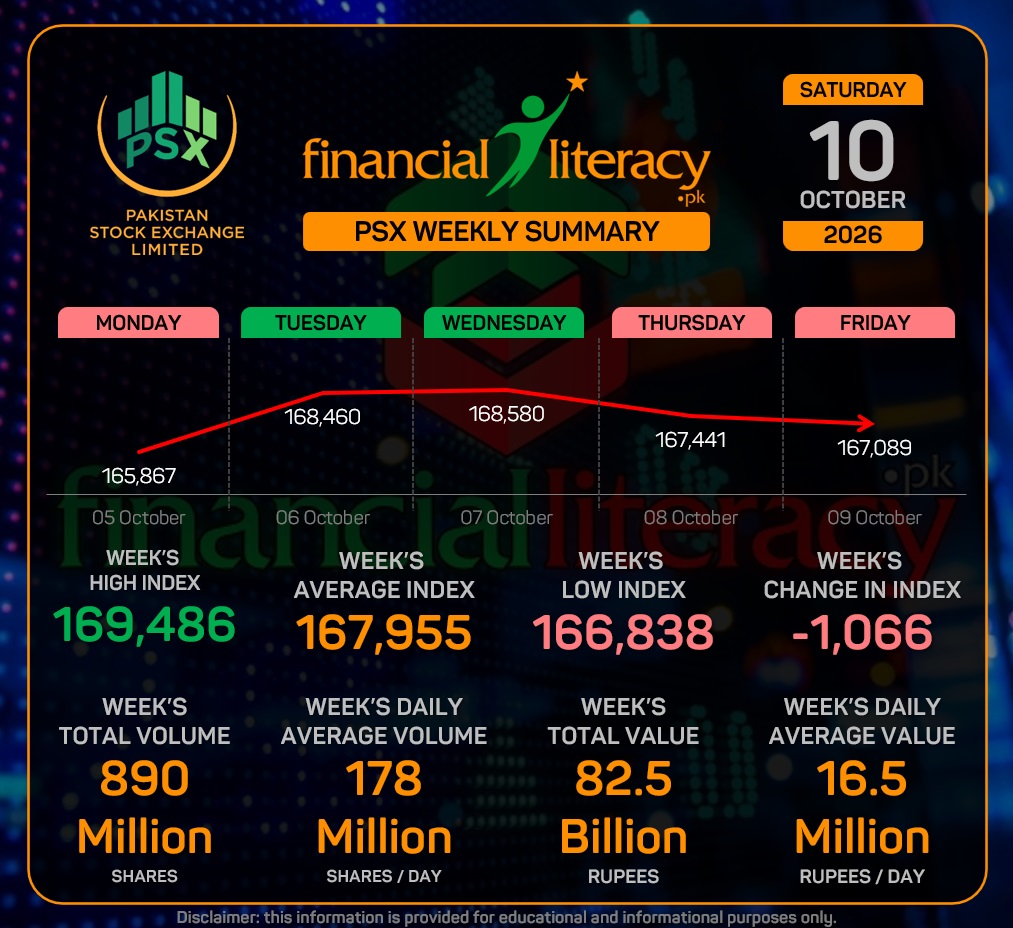
As renewed US-Iran tensions flared up and global oil prices spiked past the uncomfortable threshold, the shockwaves crashed straight onto local trading floors. It was brutal. The KSE-100 index took a heavy beating, sliding 1,066.05 points over the week to close out Friday at 167,089.27.
Previous Week’s Close (Oct 2, 2026): 168,155.49
Current Week’s Close (Oct 9, 2026): 167,089.27
Net Weekly Change: 167,089.27 – 168,155.49 = -1,066.05 points
Panic set in early. Monday kicked things off with a massive gut-punch as mounting geopolitical friction and regional war fears triggered widespread sell-offs. Investors ran for the exits. Heavyweights across commercial banks, energy majors, and cement sectors saw red.
By Thursday, the market tried to find its footing, briefly scraping a week’s high of 169,486.60. But it couldn’t hold. The underlying dread of escalating conflict in the Gulf kept a heavy boot on sentiment. Friday sealed the miserable week, dragging the index down to a low of 166,837.72 before a minor defensive recovery settled it near the close.
Volumes told the exact same story of caution. Total weekly volume hovered around 890 million shares, generating roughly Rs. 82.5 billion in value. That boils down to a sluggish daily average of about 178 million shares changing hands. People simply weren’t willing to place big bets while war drums beat thousands of miles away.
When energy supply lines wobble and global shockwaves hit home, emerging markets feel every single tremor. It’s a stark reminder that local stocks can’t escape global crosshairs.