

Remember Ali, Sara and Bilal, and their growing pizza business? They’d already decided to let outsiders buy in, cutting the shop into pieces so anyone could own a slice.
Now comes the actual event. The day they open that offer to the public for the very first time.
They print a document explaining everything: how the business runs, how much profit it makes, what the money will be used for, and how many shares are on offer. They set a price, say 50 rupees per share, and invite people to apply.
The response is bigger than they expected. Students, shopkeepers, office workers, all sending in applications for a piece of the pizza shop they’ve been ordering from for years.
Once the shares are allotted and the money collected, the pizza shop is officially listed on the stock exchange. From that day on, anyone can buy or sell its shares, not just the people who got in on day one.
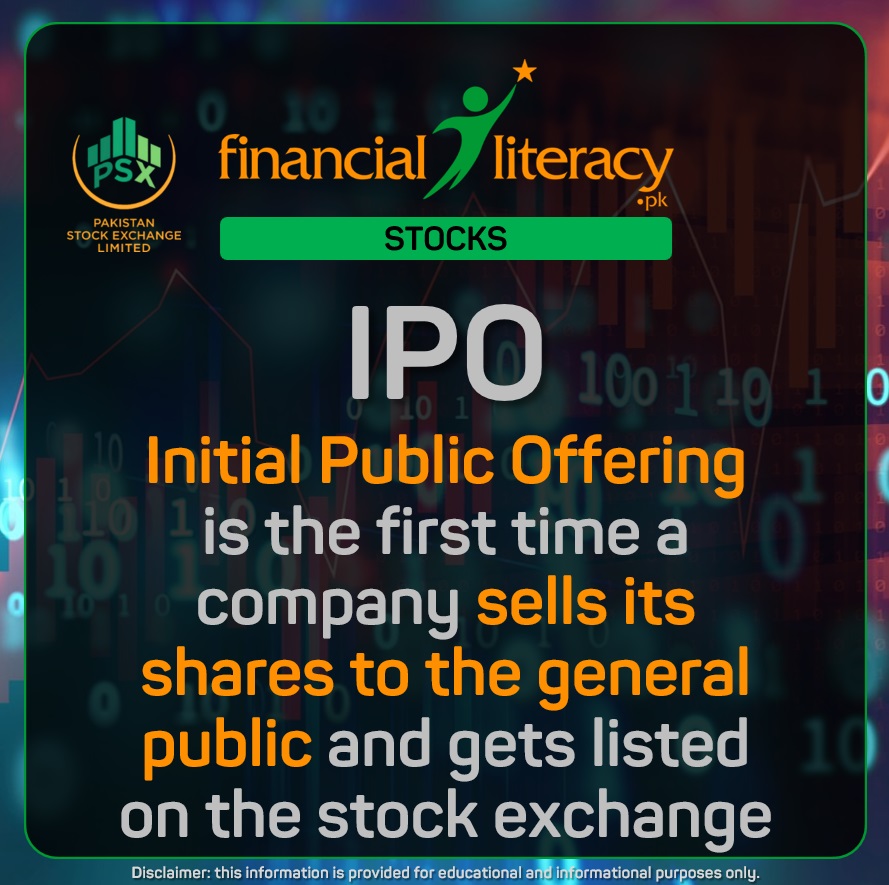
That whole event, the first sale of shares to the public, is called an IPO.
So what exactly happens in an IPO?
Before an IPO, a company is private. Its shares are held by a small group, founders, family or early investors. The public simply can’t buy in.
To go public, the company works with financial institutions to prepare a detailed document, often called a prospectus, laying out its business, financials, risks and how it plans to use the money raised. Regulators, including the SECP, review this before the offer can go ahead.
The company then sets a price, or sometimes a price range, and opens applications for a set number of days. Investors apply through their brokers, requesting a certain number of shares at that price.
If more shares are requested than are available, which happens often for popular IPOs, the shares get allotted through a process that may not give everyone the full amount they asked for. Once allotment is done, the shares are credited to investors’ CDC accounts, and the company is officially listed on the exchange, in Pakistan, the Pakistan Stock Exchange (PSX).
Why do companies go public through an IPO?
Mainly to raise money, and often a large amount at once. This funding can go toward expansion, new equipment, paying off debt or other business needs.
It also gives early investors and founders a way to sell some of their existing stake, turning their ownership into cash if they choose to.
Being listed adds visibility and credibility too. A public company is required to disclose its financials regularly, which can build trust with customers, suppliers and banks.
What should investors think about before applying?
An IPO isn’t automatically a good deal just because it’s new and exciting. The offer price is set by the company and its advisors, not by market demand, so it isn’t always a bargain.
Once listed, the share price is free to move up or down based on how the market and investors react. Some IPOs rise quickly after listing. Others fall below their offer price. Reading the prospectus and understanding the business is important before applying, just as it would be for any other share purchase.
A quick example
Suppose Sunrise Bakery Ltd. decides to go public. It offers 5 million new shares at 50 rupees each, aiming to raise 250 million rupees for new branches.
You apply through your broker for 100 shares, sending in 5,000 rupees. Because the IPO is popular, demand is higher than the shares available, and you’re allotted only 60 shares. The remaining 4,000 rupees, for the shares you didn’t get, is refunded to your account.
Sunrise gets listed on the exchange at its offer price of 50 rupees. On the first day of trading, strong demand pushes the price up to 58 rupees. If you sell right away, you make a profit on those 60 shares.
But it could go the other way too. If investors weren’t impressed, the price might drop below 50 on listing day, and you’d be sitting on a loss instead.
The takeaway
An IPO is a company’s first public offer of ownership, and often the first chance for everyday investors to buy in. It can raise real money for the business and open the door to new shareholders, but the price isn’t guaranteed to rise. As with any investment, it’s worth reading the details and understanding the risks before applying.