



Picture this. It’s the 1990s, and your grandfather has just bought shares in a company. He gets a thick, fancy-looking paper certificate with a stamp and a signature. Very official.
He’s proud of it. So proud that he hides it inside an old trunk, under the winter blankets, right next to the wedding jewelry.
Years pass. One day he wants to sell. He opens the trunk and… the certificate’s gone. Maybe it got misplaced. Maybe it got damaged in the monsoon. Nobody knows.
Now he has a big problem. How do you prove you own something when the only proof has vanished?
This kind of headache was common. And it’s exactly why the CDC exists.
So what is the CDC?
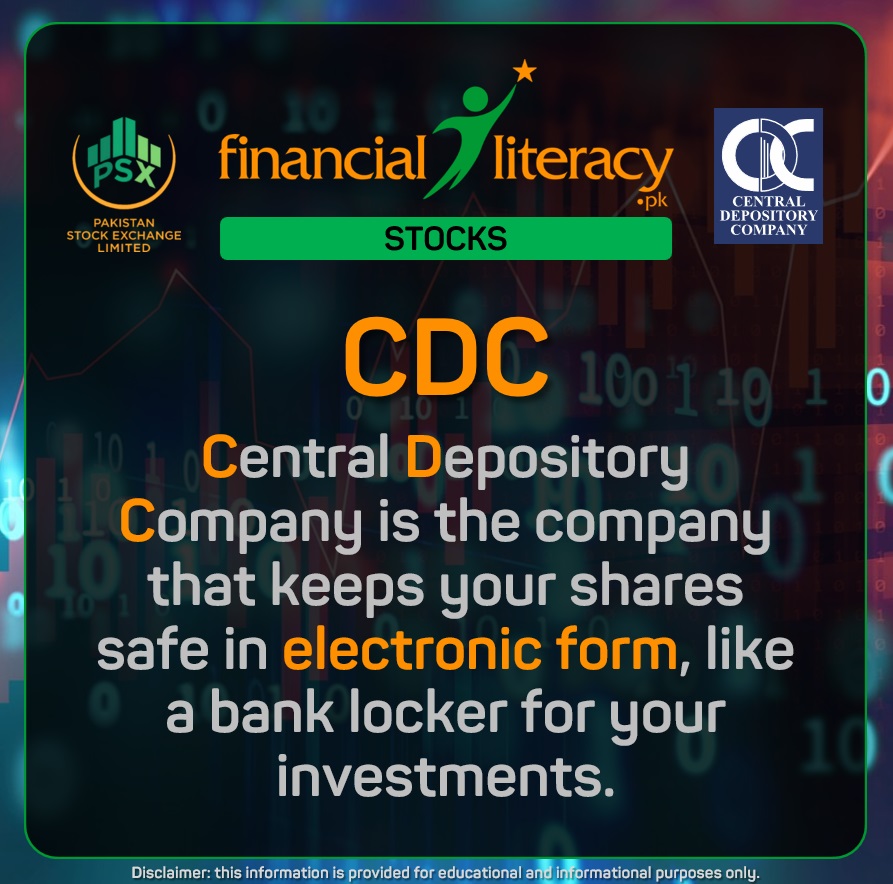
CDC stands for Central Depository Company of Pakistan. It’s a company that holds shares and other securities on behalf of investors, but in electronic form. No paper. No trunks.
Think of it like a bank. When you put money in a bank, it isn’t sitting in a drawer with your name on it. It’s recorded in the bank’s system. The CDC does the same thing for shares. It keeps a digital record of who owns what.
That record is what proves you’re the owner.
How does it work for you?
When you start investing, you open an account through a broker. That account is linked to the CDC system. So when you buy shares, they don’t arrive in your mailbox. They simply show up, electronically, in your account.
When you sell them, they move out of your account and into the buyer’s. It’s all done with a few clicks.
Your broker handles the buying and selling. The CDC handles the safekeeping. Two different jobs.
Why does it matter?
Several reasons.
It’s safer. There’s no certificate to lose, burn, tear or get stolen.
It’s faster. Moving shares from one person to another used to take days of paperwork. Now it takes far less time.
It cuts down on fraud. Fake or duplicate paper certificates used to be a real problem. A central electronic record makes that much harder.
And it keeps things clear. Your holdings are recorded in one place, so you can see exactly what you own at any time.
Where does the SECP fit in?
Remember the umpire? The SECP regulates the market, and the CDC operates under that framework. So the umpire makes the rules, and the CDC is one of the trusted keepers of the records.
A quick example
Let’s say you buy 50 shares of Sunrise Bakery Ltd. through your broker.
Once the trade is settled, those 50 shares are credited to your account in the CDC system. You don’t receive any paper. Instead, you can check your holdings whenever you like, and your ownership is on record.
A year later, you decide to sell 20 of them. Your broker places the order, a buyer is found, and the 20 shares move from your account to the buyer’s. Your balance now shows 30 shares.
Compare that with your grandfather’s trunk. No digging around. No worrying about the monsoon. No mouse.
The takeaway
The CDC is the safekeeper of the stock market. It doesn’t decide prices, and it doesn’t tell you what to buy. It simply makes sure that what you own is recorded, protected and easy to transfer. It’s not the most glamorous part of investing, but it’s the reason you can sleep well at night without a trunk of certificates under your bed.