
Zain wants to buy a second-hand bike. He finds one online, and the seller, a stranger, says, “Send me the money first, and I’ll send the bike.”
Zain hesitates. What if the money goes and the bike never shows up?
The seller has the same worry. “What if I hand over the bike and the payment bounces?”
Stalemate. Both sides want the deal, but neither trusts the other.
So they find a fix. A trusted friend, Farah, holds the money and the bike keys until both are in place. Once she’s sure the cash is real and the bike is ready, she hands each side what they’re owed. Nobody gets cheated.
Farah didn’t buy the bike or sell it. She just made sure the deal went through cleanly.
In the stock market, NCCPL plays Farah.
So what is NCCPL?
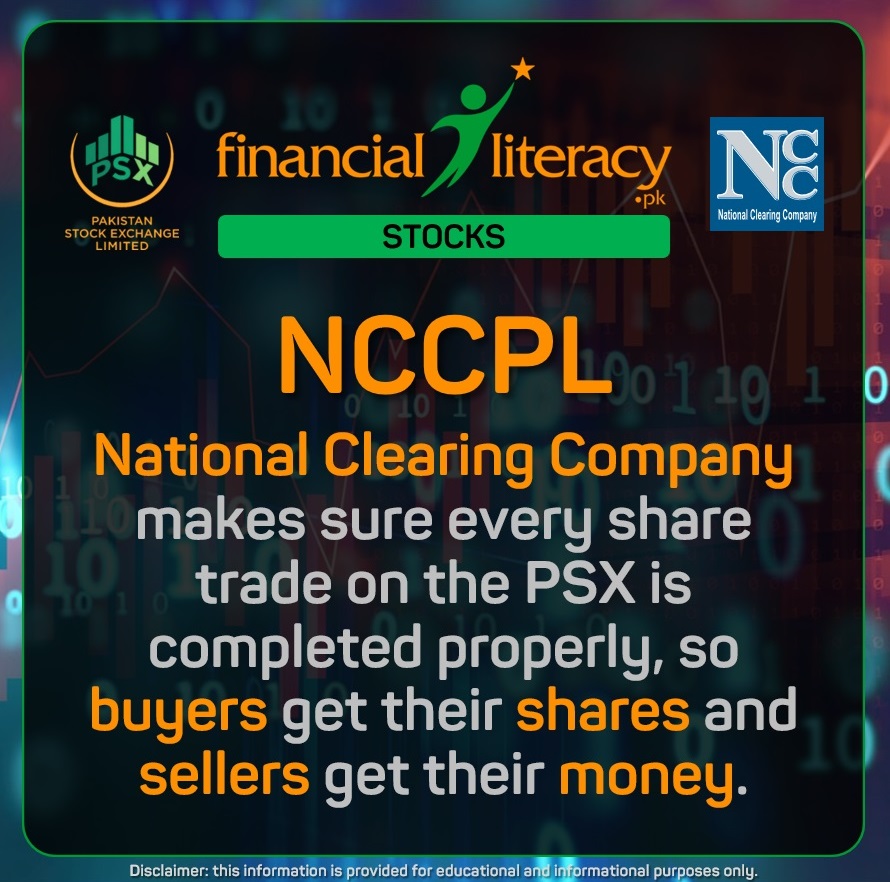
NCCPL stands for National Clearing Company of Pakistan Limited. It works as the clearing house of the Pakistan Stock Exchange. That’s a fancy term for the organization that handles what happens after you click “buy” or “sell.”
Here’s the thing. Buying a share isn’t finished the moment a price is matched. Money still has to move from the buyer, and the shares still have to move from the seller. That final step is called settlement, and NCCPL manages it.
It also steps in between the two parties. Instead of you trusting a stranger, both of you are relying on the clearing house. That’s what makes it safe to trade with people you’ll never meet.
How does it help you?
It protects you from the “what if they don’t pay?” problem. Even if the person on the other side of your trade fails to deliver, the system is built so that honest investors aren’t left stranded.
It keeps things organized. Thousands of trades happen every day. Somebody has to sort out who owes what to whom, and NCCPL does that.
It also gives investors an identity in the market. Each investor gets a unique identification number, which helps keep records clean and makes it harder for anyone to hide behind fake accounts.
Where do the others fit in?
Let’s line them up, because it can get confusing.
Your broker places your order. The stock exchange is where buyers and sellers get matched. NCCPL handles the clearing and settlement, making sure the trade actually completes. The CDC keeps your shares safe once they’re yours. And the SECP watches over all of them like an umpire.
Different jobs. One smooth system.
A quick example
Say you decide to buy 100 shares of Sunrise Bakery Ltd. at 50 rupees each. Total cost: 5,000 rupees.
You tell your broker, the order goes to the exchange, and a seller is matched with you. At this point, the deal is agreed, but it’s not complete.
Now NCCPL steps in. It works out that you owe 5,000 rupees and the seller owes 100 shares. It makes sure your payment and the shares reach the right places within the settlement period, which is usually a couple of working days.
Once that’s done, the 100 shares land in your CDC account, and the seller receives the money. Neither of you had to chase the other. Neither of you had to trust a stranger.
That’s the whole job. Boring? Maybe. Essential? Absolutely.
The takeaway
NCCPL doesn’t pick winners, and it doesn’t tell you what to buy. It simply makes sure that once a trade is agreed, it gets finished, and finished fairly. Think of it as Farah, the trusted friend holding the keys, so that every deal in the market can happen without anyone losing sleep.