
Remember Imran and Daniyal, and that straightforward loan between friends, interest paid along the way, principal returned at the end?
The government borrows money too, but sometimes it does it a little differently. Imagine the government needing quick cash to cover a few months of expenses. Instead of promising interest payments along the way, it makes a simpler offer. “Give us 95,000 rupees today,” it says. “In six months, we’ll hand you back exactly 100,000. Nothing in between, just that single difference at the end.”
No monthly interest. No complicated schedule. Just a gap between what you pay now and what you collect later.
That gap is the entire return. And that instrument is called a Treasury Bill, or T-Bill.
So what exactly is a T-Bill?
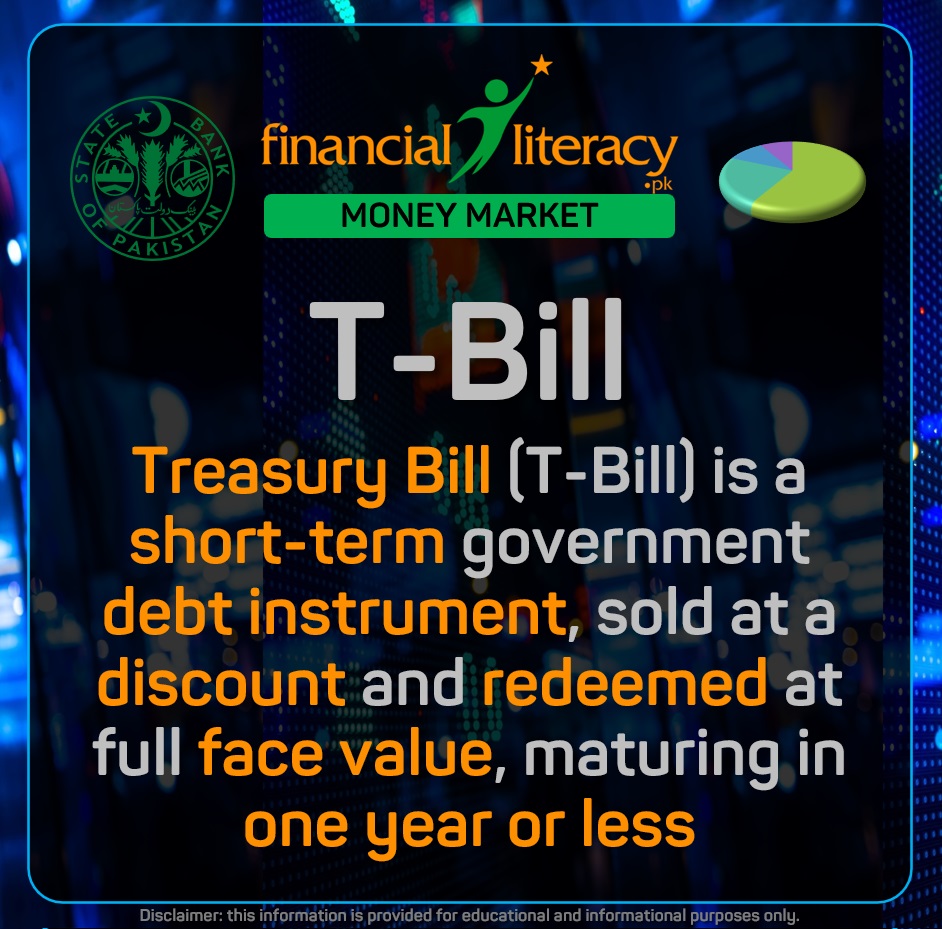
A T-Bill is a short-term debt instrument issued by the government, usually maturing in 3, 6, or 12 months. Unlike a typical bond, it doesn’t pay periodic interest. Instead, it’s sold at a discount to its face value, and the investor receives the full face value when it matures. Your return is simply the difference between the discounted price you paid and the full amount you get back.
In Pakistan, T-Bills are issued by the State Bank of Pakistan through regular auctions, and they’re widely used by banks, financial institutions, and individual investors.
Why are T-Bills considered low-risk?
Two reasons mainly. They’re backed by the government, which is generally considered a reliable borrower, far less likely to default than most companies. And their short maturities mean your money isn’t locked away for long, reducing the uncertainty that comes with holding something over many years.
This combination makes T-Bills one of the safer, more liquid places to park money for a short period, often used as a benchmark for what a “risk-free” short-term return looks like in the market.
How is the return calculated?
Since there’s no interest payment along the way, the return comes entirely from the discount. If you pay 96,000 rupees for a T-Bill with a 100,000 rupee face value, maturing in six months, your return is the 4,000 rupee difference.
To compare this fairly against other investments, that return is usually expressed as an annualized percentage, since six months is only half a year. A 4,000 rupee gain on a 96,000 rupee investment over six months works out to roughly an 8% annualized return.
Who typically invests in T-Bills?
Investors looking for safety and short-term flexibility over growth. Businesses that want to park spare cash for a few months without taking on much risk. Conservative investors who want a predictable, government-backed return. And institutions that need a reliable, short-term place to hold funds between other investment decisions.
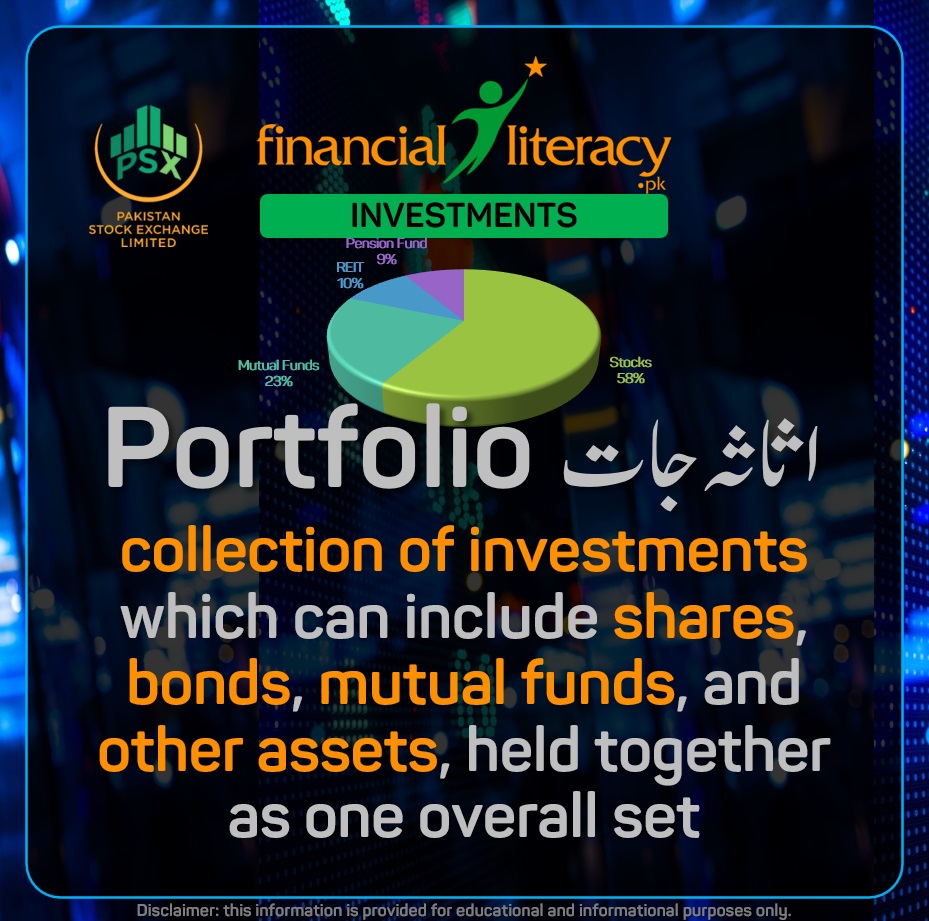
T-Bills aren’t designed to compete with shares for growth. They sit at the safer, more predictable end of a portfolio, the kind of balance we talked about earlier.
How can you actually invest in T-Bills?
T-Bills are sold through regular auctions conducted by the State Bank of Pakistan (SBP). Individual investors don’t usually bid directly in these auctions. Instead, you go through a bank or a Primary Dealer (banks authorized by SBP to deal in government securities), who can place a bid on your behalf.
A more accessible route for individuals is the SBP’s Savings Bonds platform or your bank’s investment desk, where you can invest in government securities, including T-Bills, with a basic bank account, CNIC, and a minimum investment amount, which varies by bank.
You can also gain exposure to T-Bills indirectly through a money market mutual fund, which we covered earlier. These funds pool money from many investors and invest largely in T-Bills and similar short-term instruments, giving you access without needing to deal with auctions yourself.
Since T-Bills are short-term, remember that your money is tied up only until maturity, after which you’d need to reinvest or withdraw, depending on what you want to do next.
A quick example
Suppose you buy a 6-month T-Bill with a face value of 100,000 rupees, at a discounted price of 96,000 rupees.
You pay 96,000 rupees now. Six months later, on the maturity date, the government pays you the full 100,000 rupees. Your profit is 4,000 rupees, earned without a single interest payment along the way, and without any exposure to the stock market’s ups and downs.
If you’d instead invested that same 96,000 rupees in shares, your return could have been higher, or lower, or even negative, depending on how the market moved. The T-Bill trades that uncertainty for a fixed, known outcome.
The takeaway
A T-Bill is a simple, short-term loan to the government, bought at a discount and repaid at full value. There’s no interest payment to track, just one clean number at maturity. For investors who want safety and a short time horizon over growth, it’s one of the most straightforward and dependable options around.